re-elect Colleen Jones for the Mayor of the City of Trail 2026

MY PLATFORM
Over the past four years, we have worked through some very difficult issues, but we have also made real progress.
Under my leadership and with Council’s support , we have invested in infrastructure, protected important health services, moved major projects forward, strengthened our staff team, advocated for more supports for our community and continued building relationships with other levels of government
This election is not about one issue. Public safety and homelessness are important, but Trail’s future also includes housing, seniors, health care, infrastructure, childcare, economic development, recreation, responsible taxation and making sure our community is prepared for the future.
I want to continue that work.


1. PUBLIC SAFETY, SHELTER & COMMUNITY WELL-BEING
Enforcement:
Visible policing, adequate staffing, specialized supports to address violence, property crime and public disorder.
Coordination:
Ensuring our front line safety worker teams have resources in place so they can work safely and together.
Shelter:
Start planning early for a permanent shelter location and advocate for other supportive housing options alongside it.
Public safety continues to be one of the most difficult and important issues facing our community.
I believe everyone in Trail has the right to feel safe, residents, businesses, visitors and people who are unhoused.
There are behaviours we should not accept simply because someone is struggling with homelessness, addiction or mental-health challenges. Violence, threats, property crime, vandalism and serious public disorder need to be addressed.
At the same time, homelessness itself is not a crime. Simply moving people from one block to another does not solve the problem.
That is why I believe enforcement, public safety, compassion and appropriate supports all have to be part of the response.

Community safety requires more than one tool.
It requires policing, prevention, coordinated intervention, outreach, treatment and housing supports working together
RCMP, Community Safety & Coordinated Response
I will continue advocating for adequate RCMP staffing and resources, but public safety also depends on having the right specialized supports in place.
My priorities include:
-
Supporting implementation of a Situation Table so agencies can work together on individuals and situations presenting elevated risk.
-
Advocating for the provincial Homeless Encampment Action Response Team (HEART) program in Trail to improve coordination between outreach, housing, health, bylaw, RCMP and community partners.
-
Supporting HEARTH (Homeless Encampment Action Response Temporary Housing) , opportunities where they can help provide appropriate temporary shelter and housing options.
-
Continuing to support the Special Crimes Unit.
-
Continuing to support the Integrated Border Enforcement Team (IBET) and its work addressing cross-border crime and security in our border region.
-
Continuing to advocate for visible policing and adequate RCMP staffing.
-
Supporting strong coordination between RCMP, bylaw, fire, ambulance, outreach and other community partners and volunteers who are on the front lines of this toxic drug crisis saving lives. They deserve safety and support from personal and public attacks for the work that they do.
-
Continuing to push senior levels of government for the mental-health, addictions, treatment, recovery and housing supports that policing alone cannot provide.
Our Bylaw Officers
Public safety is about more than policing. Our City bylaw officers are often on the front line dealing with some of the most difficult situations in our community.
They respond to complaints, work with residents and businesses, address problem properties and public-space concerns, and frequently interact directly with vulnerable individuals.
Their job is not simply enforcement. It also requires communication, prevention, relationship building and connecting people with appropriate supports. I believe their work deserves to be recognized and supported!
Planning now, engage neighbours, communication is key even if there are disagreements
Shelter & Planning Early for What Comes Next
The current Riverside shelter was always intended to be temporary while a more appropriate longer-term solution was identified.
I have already started the conversation about preparing early for what comes next. Myself and Council raised this issue in early September 2026 and was raised again during our discussions at UBCM (Union of BC Municipalities) in the middle of September.
The message has been clear: we cannot wait until the temporary arrangement is nearing its end before planning for a new location.
I will continue those discussions with BC Housing, the Province, regional partners and potential operators.
I also believe we learned something important from the current shelter location: communication and neighbourhood engagement need to begin earlier.
Even when decisions are difficult and people disagree, residents deserve to know what is happening, why it is happening and have an opportunity to be heard.
My priorities include:
-
Continue the discussions already underway on a longer-term shelter solution.
-
Work with BC Housing, the Province, regional partners and service providers.
-
Improve communication with residents and neighbourhoods affected by shelter decisions.
-
Advocate for supportive housing and other housing options so the shelter is not the only response available.
2. HOUSING , DEVELOPMENT & A STRONGER DOWNTOWN
Redevelopment:
Developing the lot on Spokane and Helena into a unit that brings more people into the downtown core.
Workforce:
Advancing opportunities for workforce and student housing to strengthen the recruitment and retainment of new students and employees.
Investment:
Make it easier and attractive to develop downtown, ensure infrastructure is ready for growth and support the businesses that are already operating in our core.
Housing needs to be one of Trail’s priorities for the next four years. We need different kinds of housing because people’s needs are different.
That includes housing for families, seniors, workers, students and people who need additional support.
Downtown Redevelopment
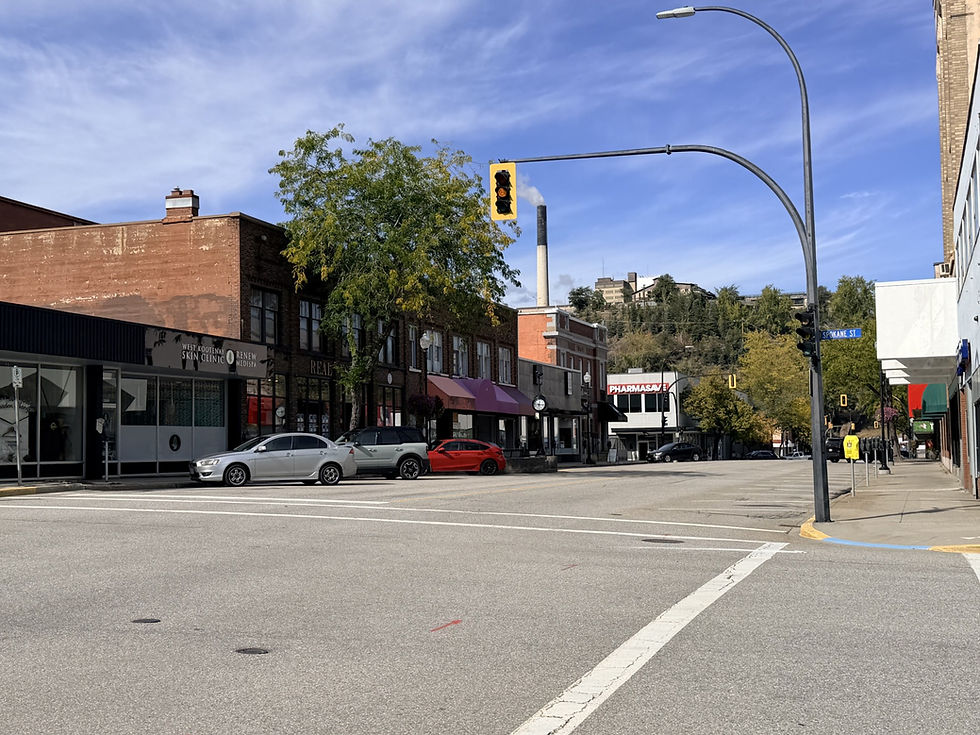
Another important project that happened under my leadership was the important steps taken to acquire and clear the properties at 900 Spokane Street and 901 Helena Street. The next step is determining how that site can best contribute to our downtown.
I want to see those properties used to help bring people back into the downtown core. That could include housing combined with commercial or community space.
More people living downtown creates activity, supports local businesses and contributes to a safer and more vibrant downtown.

Combining the need for housing with downtown investment, to create a safer and more vibrant core.
Workforce and Student Housing
With opportunities connected to Teck, health care, Selkirk College and other employers, housing is also an economic-development issue.
If someone is offered a job in Trail but cannot find an appropriate place to live, that affects recruitment and retention.
I am committed to advancing opportunities for workforce housing, student housing, attainable rental housing, and developing partnerships that bring existing or underused properties into productive housing use.
Development and a Stronger Downtown
I want Trail to be known as a community where responsible development is welcomed. That means clear rules, timely processes, good communication, infrastructure that can support growth, and working constructively with people who want to invest here.
Our downtown challenges cannot be solved through enforcement alone. A healthy downtown needs residents, businesses, visitors, events, activity, investment, safe public spaces, accessibility and people who feel comfortable spending time there.
My priorities include:
-
Move redevelopment of 900 Spokane / 901 Helena forward.
-
Encourage more downtown housing.
-
Support workforce, student, seniors and attainable housing.
-
Identify other opportunities for housing development.
-
Support responsible private-sector development.
-
Remove unnecessary barriers where we can.
-
Ensure infrastructure is ready for future growth.
-
Continue downtown revitalization.
-
Support businesses already operating in our downtown.

3. SENIORS, ACCESSIBILITY & AGING IN PLACE
Housing:
Creating a variety of housing choices for seniors that fit their needs and abilities.
Accessibility:
Keeping our city and its services accessible by prioritizing accommodating infrastructure and public transportation.
Connection:
Supporting community organizations and volunteers with their programming for keeping seniors active and connected.
Our seniors have helped build Trail into the community we have today. As our population ages, we need to make sure Trail remains a place where people can live safely, independently and with dignity.
This is an area I am committed to making a much greater priority.
I hear from seniors who love Trail and want to stay here, but can’t find a home that fits their needs anymore.
Housing for Seniors
Not every senior needs assisted living or residential care. Many simply need a smaller home, an accessible home, an apartment with an elevator, a home without stairs, housing closer to shops, health care or transit, or an affordable option after leaving a larger family home.
Creating more appropriate housing choices for seniors, it can also help the rest of the housing market by making larger homes available for younger families.
Aging in Place, Accessibility and Transportation
Supporting seniors is about more than housing. It also means looking at Trail through the eyes of someone who may no longer drive, may have mobility challenges, may be living on a fixed income or may depend more heavily on nearby health and community services.
I am committed to focusing on accessible sidewalks, pedestrian crossings, City facilities, public spaces, transportation, recreation and future development.
Health care close to home is especially important for seniors. So is transportation. I will continue working with regional partners and BC Transit so people who no longer drive can still get to appointments, shopping, recreation and community activities.
A strong community is one where people can grow up, raise a family and, when the time comes, age in place in the community they call home.
Staying Connected
Isolation can have a serious impact on quality of life. Our community organizations, volunteers, seniors programs and recreation opportunities are extremely important in keeping people active and connected.
My priorities include:
-
Encourage more accessible housing for seniors
-
Help seniors remain in Trail as they age.
-
Continue advocating for health-care services close to home.
-
Improve accessibility in City infrastructure and facilities.
-
Consider seniors when planning sidewalks, crossings and transportation.
-
Support recreation and social opportunities.
-
Work with community organizations that provide important services to seniors.
-
Make seniors part of our housing and downtown-development planning.
4. HEALTHY COMMUNITY, HEALTH CARE & ENVIRONMENT
Partnership:
Keep collaboration going between municipal, community, health and industry partners to tackle complex environmental issues in Trail.
Advocacy:
Ensuring primary health care is available close to home, and that residents are heard when decisions regarding access are being made.
Training:
Working with Interior Health, Provincial Government and Selkirk college to support more local health-care training and recruitment for our area.
A healthy community is about more than hospitals and doctors. It includes primary health care, prevention, clean air and water, environmental health, community partnerships and making sure people can access the services they need close to home.
Trail Health & Environment Committee
As Mayor, I chair the Trail Health & Environment Committee. That role is important to me because Trail has a long history of bringing local government, community, health and industry partners together to tackle complex environmental and health issues.
I want to build on that legacy and continue to strengthen those partnerships and ensure that collaboration remains central to how Trail addresses the challenges ahead.
Protecting Local Health Services
The outpatient laboratory issue reinforced something I believe very strongly: when services affecting Trail residents are being considered, local voices need to be at the table. I am proud of the work that was done on this issue. The collaboration and respectful relationships that were built during this time will benefit our community in the future. I played a key role in developing a new Medical Laboratory Assistant program with Provincial support of $400,000 and the program will be delivered at the Trail campus. This is a perfect example of what can happen when a community identifies a challenge and works collaboratively toward a solution.
I continued asking questions, bringing people together and advocating for local laboratory services. The community played an enormously important role in that effort.
One of the positive outcomes I really worked hard on was the greater attention to local health-care workforce shortages, including development of a new Medical Laboratory Assistant program at Selkirk College’s Trail Campus with provincial support.
My priorities include:
-
Continue my leadership through the Trail Health & Environment Committee.
-
Advocate for health services close to home.
-
Work with Interior Health, the Province, Selkirk College and local health partners.
-
Support local health-care training.
-
Advocate for recruitment and retention of health professionals.
-
Continue environmental-health monitoring and prevention work.
-
Make sure residents receive clear information when health or environmental issues arise.
-
Continue supporting partnerships that improve the overall health of our community.
5. RESPONSIBLE SPENDING OF TAXES & INFRASTRUCTURE
Grants:
Keep pursuing grants pro-actively and aggressively, to move major capital projects forward without taxpayers carrying all the costs.
Infrastructure:
Planning ahead on maintenance, rather than waiting for generations-old municipal systems to fai
Accountability:
Reviewing duplicated services of RDKB and the City and financial spending reports, to ensure residents getting the best value for their dollar.
I know residents are feeling the pressure of rising costs. Municipal government has to be careful with taxpayers’ money while still maintaining the infrastructure and services our community depends on.
One of the most important ways we can protect Trail taxpayers is by bringing outside funding into our community.
Keeping taxes under control is not only about reducing spending. It is also about bringing outside investment into Trail and planning ahead.
Grant Funding
Our City staff do tremendous work identifying grants, preparing applications and managing the reporting and project requirements that follow.
A major recent example is the $4.53 million in infrastructure funding announced in July 2026 for a new twin transmission watermain along Charles Lakes Drive, strengthening the reliability and resilience of Trail’s water supply system and providing a critical backup connection.
We have also secured significant funding for other major projects in recent years. I believe we should recognize staff for that work.
Successful grants allow Trail to move projects forward without asking local taxpayers to carry the entire cost.
Infrastructure
Much of our infrastructure was built generations ago, we just celebrated our 125 Anniversary of being a municipality. We have a responsibility to maintain it properly while planning for future growth.
That includes water, roads, sewer, recreation facilities, public buildings and other core infrastructure.
My priorities include:
-
Keep municipal spending responsible.
-
Continue aggressively pursuing grant funding.
-
Prioritize essential infrastructure.
-
Plan ahead rather than waiting for infrastructure to fail.
-
Make sure infrastructure can support future housing and economic development.
-
Clearly explain project costs and funding sources to residents.
-
Continue looking for efficiencies while protecting essential services.
We need to start comparing similar services between the RDKB and the City of Trail, to ensure you are getting the best value for your paid tax money.
Regional District Accountability and Value for Taxpayers
Trail residents contribute significantly to regional services through the Regional District, and I believe we need clearer, more regular information about how those dollars are being spent.
Too often, residents see an increase on their tax bill and assume it is all City taxation. In reality, a large portion of that bill supports regional services.
I believe the City should receive clear information throughout the year and not just at budget time about changes in regional spending, staffing, equipment, service levels and other costs that affect Trail taxpayers.
I also believe we need to look carefully at whether services are being duplicated. If the City is already doing similar work, or could provide a service more efficiently in-house, then we should be asking whether there is a better and more cost-effective way to deliver that service.
That does not mean bringing everything in-house. It means reviewing services responsibly and asking a simple question: are Trail taxpayers getting the best value for the dollars they are contributing?
My priorities include:
-
Ask for stronger year-round reporting from the Regional District.
-
Review areas where services may be duplicated.
-
Consider whether some services could be delivered more efficiently by the City.
-
Make sure Trail Council understands significant regional spending changes that affect local taxpayers.
-
Clearly explain the difference between City taxes and regional taxes.
-
Continue asking questions about the value and cost of the services Trail receives.
-
Advocate for transparency, accountability and value for Trail taxpayers.
6. PROTECTING TRAIL’S TAX BASE
Stability:
Approaching industrial tax discussions with Teck carefully and transparently to protect Trail's long-term stability while maintaining a respectful, constructive relationship with our largest employer.
As Mayor, I chair the Major Industrial Property Taxation Committee, which deals with one of the most significant financial issues facing our community.
Major industry provides a very substantial share of Trail’s municipal tax revenue, with Teck being by far our largest industrial taxpayer. That revenue is critical to the services, infrastructure and facilities our residents rely on.
Teck is also one of our community’s largest employers and an important economic partner. At the same time, any request to reduce the amount of municipal taxation paid by major industry has significant implications for the City and for every other taxpayer.
My role as Chair is to make sure these discussions are approached carefully, transparently and with a full understanding of the impact on residential and business taxpayers, municipal services and future infrastructure investment.
My priority is to protect Trail’s long-term financial stability while maintaining a respectful and constructive relationship with Teck.

7. ECONOMIC DEVELOPMENT, JOBS & AN OPEN-FOR-BUSINESS TRAIL
Diversification:
Encouraging new advanced manufacturing, critical minerals and recycling initiatives and supporting our major industries already here.
Processes:
Improving the experience for our current small businesses and investors, by reviewing city bylaws, clarifying procedures, being responsive and by continuing to promote Trail as a place to live, work & invest.
Economic development is about creating the conditions that allow people and businesses to succeed.
Trail already has tremendous strengths: major industry, health care, education, recreation, existing infrastructure, skilled workers and strong regional connections. We need to build on those strengths.
Trail already has a variety of assets that make our community strong: we need to support what we have & encourage growth at the same time.
Supporting Small Business
I want to continue supporting businesses throughout downtown, Waneta, Rossland Avenue and East Trail and our other commercial areas. Small businesses provide jobs, services and character to our community. Bringing special events into our community helps our small businesses and helps develop vibrancy.
Major Employers and Future Industries
Teck remains central to Trail’s economy. At the same time, I want to continue supporting diversification and new opportunities associated with technology, advanced manufacturing, critical minerals, battery and recycling initiatives, Metal Tech Alley and our regional economic-development partners.
Housing, Childcare and Health Care are Economic Development
When employers are trying to recruit people, they need workers to be able to find housing, childcare, health care, recreation and a community where their families want to live. That is why these issues are connected.
Development Processes
I want Trail to continue improving the experience of people who want to build, renovate or invest here.
Planning, building inspections and development processes should be clear, professional and responsive.
My priorities include:
-
Attract new investment.
-
Continue working with regional economic-development partners.
-
Support Teck and other major employers.
-
Encourage economic diversification.
-
Review bylaws and processes that unnecessarily hinder appropriate development.
-
Support workforce housing.
-
Complete childcare projects that help working families and employers.
-
Ensure infrastructure is ready for growth.
-
Promote Trail as a place to live, work and invest.
8. FAMILIES & QUALITY OF LIFE
Child Care:
Continue pushing for the completion of the Unicorn Childcare Centre, to support and attract more employees for work (in critically understaffed sectors).
Quality of Life:
Maintaining recreation facilities, parks, public spaces, and continuing to support or attract tournaments, cultural opportunities and major community events like Silver City Days.
People do not choose a community based only on tax rates or development permits. They choose a community because of quality of life.
Trail has tremendous recreation facilities, parks, sports, culture, volunteers and community spirit.
Child Care
The Unicorn Childcare Centre is an important investment in families and in our local workforce. Childcare is important for families, but it is also important for workforce recruitment and economic development. I have continued to push for the completion of that project.
Recreation
Our recreation facilities are part of Trail’s identity. Recent investments in the Trail Memorial Centre and other facilities are about protecting assets that previous generations built while making them more efficient and sustainable for the future.
Events and Community Life
Events such as tournaments, conventions, Silver City Days, the recent BC Winter Games and the Association of Kootenay Boundary Local Government convention, bring people into our community and support local businesses. They also strengthen community pride.
My priorities include:
-
Complete the Unicorn childcare project.
-
Maintain and improve our recreation facilities responsibly.
-
Support sport, arts and cultural opportunities.
-
Continue attracting events and tournaments.
-
Support volunteers and community organizations.
-
Maintain parks and public spaces.
-
Improve accessibility.
-
Preserve the community facilities that generations before us built.
9. CLIMATE, EMERGENCY PREPAREDNESS & PLANNING FOR THE FUTURE
Resilience:
Prepare current and design future infrastructure to withstand extreme weather conditions, and finding government funding to do so.
Preparedness:
Plan for emergencies and enhancing land-use strategies to protect our residents and infrastructure pro-actively from foreseeable risks due to climate change.
Planning for climate change does not mean losing sight of practical municipal priorities. It means making sure our infrastructure, emergency planning and future development are prepared for changing conditions.
Trail has integrated planning and climate responsibilities in its staffing structure, allowing climate considerations to be considered alongside land-use and infrastructure planning.
My priorities include:
-
Support preparation of infrastructure for extreme weather and future climate conditions.
-
Continue emergency preparedness planning.
-
Consider climate resilience when designing major capital projects.
-
Make sure Trail is positioned to qualify for provincial and federal infrastructure funding.
-
Plan future neighborhoods and development around our soon to be adopted Official Community Plan
10. OFFICIAL COMMUNITY PLAN: PLANNING TRAIL’S FUTURE
Framework:
Coordinating infrastructure with housing, land use and future growth, based on the most recent identified City priorities, by continuing the work on officializing the new Official Community Plan for Trail.
One of the major projects that I have been pushing for is nearing completion. That is our updated Official Community Plan (OCP).
The OCP provides a long-term framework for land use, growth, development and environmental stewardship. I have served on the OCP Committee as part of that process.
The OCP is not formally completed yet, so I do not want to claim that it is. But a significant amount of work has gone into bringing it close to completion. We are at our second reading, and a public hearing is being planned for November 2026. After that it goes to the province for sign off and back to Council for one final time for third and final reading .
The real test will be what happens afterward.
My priorities include:
-
Complete the formal OCP process.
-
Encourage housing and appropriate development.
-
Support a stronger downtown.
-
Coordinate infrastructure with future growth.
-
Protect important community and environmental values.
-
Keep reviewing policies as Trail changes.
11. REGIONAL COLLABORATION & THE WARFIELD AMALGAMATION STUDY
Amalgamation:
Continuing our Trail-Warfield restructuring study whilst staying thoughtful, transparent and based on good information, so residents understand the impact on taxation and services.
Partnership:
Keep building our direct working relationship with Rossland, Castlegar, Nelson and the RDKB, to give our communities a strong regional voice when dealing with provincial or federal government.
Trail does not exist in isolation. We share services, infrastructure, employees, recreation and economic activity with neighbouring communities. Good regional relationships and respectful collaboration help make our communities stronger.
Warfield Amalgamation Study
Trail and Warfield are examining the question of amalgamation. I believe that process needs to be thoughtful, transparent and based on good information.
Residents need to understand what amalgamation could mean for taxation, services, infrastructure, staffing, governance and the long-term future of both communities.
No one should prejudge the outcome. My priority is to make sure residents receive the information they need before any future decision is made.
Regardless of the outcome, Trail and Warfield will continue to have many reasons to work together.
Regional Partnerships
I also want to continue strengthening relationships with Rossland, Castlegar, Nelson, the RDKB and other regional partners. Sometimes the strongest voice is a regional voice.
12. ADVOCACY, PARTNERSHIPS & BRINGING TRAIL’S VOICE FORWARD
Presence:
Showing up, knowing our local issues, building strong relationships, continuing to push face-to-face with provincial and federal governments at standstills.
Advocacy:
Fighting fiercely for critical resources in health care, infrastructure, housing, mental health and addiction recovery services with senior government.
Funding:
Pushing for sustainable funding relief to protect small municipal budgets from carrying disproportionate safety and social service pressures.
Many of Trail’s biggest challenges cannot be solved by City Hall alone.
Mental health and addictions, housing, homelessness, health care and many aspects of public safety require involvement from other levels of government.
As your Mayor, one of the most important roles I have is making sure the community’s voice is heard outside City Hall.
Over the past four years, I have consistently advocated for Trail regionally, provincially and federally. I have raised issues directly with ministers, government representatives, agencies and regional partners.
Trail may be a smaller city, but our issues matter and our voice deserves to be heard.
That advocacy has included:
-
Mental-health and addiction treatment and recovery services.
-
Housing and homelessness.
-
Supportive housing and longer-term shelter solutions.
-
RCMP resources and public safety.
-
Health care and workforce training.
-
Infrastructure and capital funding.
-
Support for local government dealing with issues that extend far beyond municipal jurisdiction.
I believe advocacy means more than attending a meeting. It means showing up, knowing the issue, building relationships, making Trail’s case, following up and continuing to push when the answer is not immediate.
My priorities include:
-
Continue representing Trail directly with regional, provincial and federal decision-makers.
-
Keep advocating for stronger mental-health, addictions, treatment and housing supports.
-
Push for more sustainable funding for communities carrying disproportionate public-safety and social-service pressures.
-
Continue advocating for adequate policing and community-safety resources.
-
Build on the relationships already established with ministries, agencies and neighbouring communities.
-
Work collaboratively where we can, while being firm about Trail’s needs.
-
Keep residents informed about what we are asking for and what progress is being made.

13. GOOD GOVERNMENT, COMMUNICATION & LEADERSHIP
Teamwork:
Lead council as a collaborative team, supporting our dedicated staff so they have the tools to deliver succesful grants, capital projects and daily city services.
Communication:
Provide clearer, more timely and easily accessible updates regarding major council decisions, taxes and public safety initiatives.
I believe good local government depends on teamwork. A Mayor does not accomplish things alone.
Council sets direction, staff provide professional advice and carry out Council decisions, and community partners and residents contribute their knowledge and experience.
I am proud that our Council has been able to work together through both good times and difficult ones.
Our Staff
We have a dedicated staff team, and I believe one of Council’s responsibilities is to create an organization where talented people want to work and where staff have the tools and support to do their jobs.
That includes recognizing the detailed work staff do behind successful grants, capital projects, development approvals and the many services residents rely on every day.
Communication
I have heard it so often during this campaign ..we need more communication from City Hall
I also believe we can continue improving how the City communicates. Residents should not have to search through lengthy reports to understand what Council decided or why.
I am committed to providing clearer and more timely information about major Council decisions, public projects, taxes, regional costs, shelter and public safety initiatives, and significant changes affecting residents.
Good communication does not mean everyone will agree with every decision. It means people understand the information Council had, why a decision was made and what happens next.
My priorities include:
-
Continue working as a Council team.
-
Recognize the contribution of City staff.
-
Improve communication following Council meetings.
-
Provide clearer project updates.
-
Strengthen accountability and transparency.
-
Listen to residents, including when we disagree.
-
Continue building respectful relationships with regional, provincial and federal partners.